The MLB Wild Card round has been a net positive for baseball. It keeps more fan bases interested deeper into the season, gives more teams a path to the postseason and ensures that a team stuck in a loaded division still has a reasonable chance to make the playoffs.
But a good format can still be improved.
After watching this year's Wild Card Series, there are several changes MLB should consider. And no, moving games away from Peacock isn't one of them. Streaming is an increasingly important part of how fans watch sports, and making postseason games available there isn't the problem.
The bigger issue is creating a postseason format that is as competitive and fair as possible.
Give the Lower Seed a "Home" Game
It makes little economic or logistical sense to travel between cities during a three-game series. MLB could give the lower seed Game 1 at home before moving Games 2 and 3 to the higher seed's park, but that creates unnecessary travel and leaves the format vulnerable to weather delays.
There is a much simpler solution.
Right now, the higher seed gets to bat last in every game of the Wild Card Series. In every other postseason round, the lower seed only has to win once on the road to win the series. In a three-game Wild Card Series, the lower seed has to win twice without ever getting the strategic advantage that comes with batting last.
MLB could borrow a rule from college baseball's Super Regional round: make the lower seed the designated home team for Game 2.
The game would still be played in the higher seed's ballpark, but the higher-seeded team would bat first. The logistics don't change. The travel doesn't change. But each team gets at least one game with the strategic advantages that come with being the home team.
It's a small change that would make the round more balanced without taking away the higher seed's biggest reward: hosting the entire series.
Give the Better Record the Home Games
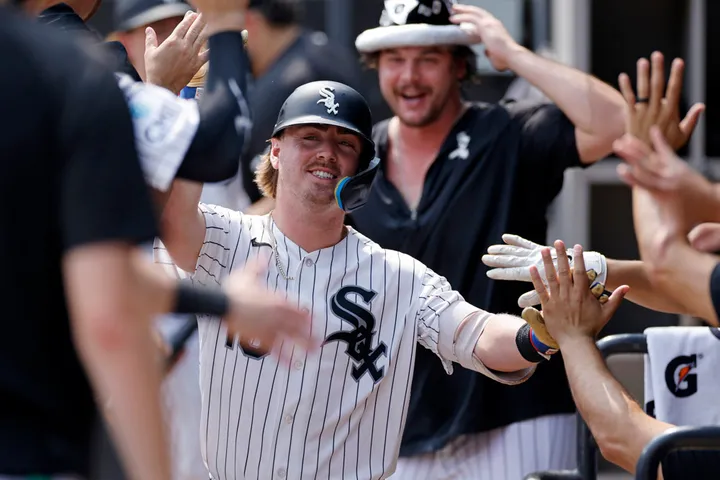
The Chicago White Sox overcame the trip to Houston, sweeping the Astros in two games. But those games should have been played in Chicago.
Houston won the AL West and finished 81-81. Chicago finished 84-78. Yet because the Astros won their division, they received the No. 3 seed and hosted the entire Wild Card Series.
Winning a weak division should guarantee a ticket to the postseason. It shouldn't automatically guarantee home-field advantage over a team with a better record.
Division championships should matter. But once the playoff field is set, home-field advantage should go to the team that performed better over 162 games.
This isn't unique to baseball. Other sports reward division winners with postseason seeding regardless of record, and it can create the same problem: a team receives a significant playoff advantage based more on geography than performance.
Make winning the division your automatic ticket into October. Make your record determine where you play once you get there.
Reseed the Field or Let the Top Seed Choose
The White Sox-Astros situation didn't just affect those two teams. It affected Tampa Bay and Cleveland, too.
The Rays earned the No. 1 seed in the American League with a 98-64 record. Their reward? A Division Series against the New York Yankees, who finished 93-68 and had the second-best record in the AL.
Nobody else in the league won more than 87 games.
Meanwhile, No. 2 Cleveland knew it would face either Houston or Chicago, teams that finished with 81 and 84 wins, respectively.
So Tampa Bay was the best team in the American League over 162 games and ended up drawing the strongest remaining team.
That doesn't make much sense. MLB could fix it in one of two ways.
Option A: Reseed after the Wild Card round.
The highest remaining seed plays the lowest remaining seed. In this year's American League bracket, that would have sent Chicago to Tampa Bay and New York to Cleveland.
Simple. Logical. And it actually rewards the team that earned the No. 1 seed.
Option B: Let the top seed choose its opponent.
This is where MLB could borrow an idea from the Professional Women's Hockey League.
Rather than automatically assigning the top seed an opponent, let the No. 1 seed choose from the Wild Card winners.
Think about the strategy involved. The Rays and Brewers could consider regular-season matchups, pitching rotations, injuries and even which team burned through more of its bullpen during the Wild Card round before deciding whom they wanted to face.
And then they'd have to live with the choice.
Imagine the storylines if a No. 1 seed hand-picked its opponent and lost.
That's compelling television, creates an actual advantage for finishing first and gives teams another reason to fight for the league's best record rather than simply securing a bye.
Baseball Needs to Keep Innovating
Baseball has already shown that it can change.
The pitch clock, expanded playoffs and other recent changes would have seemed radical not that long ago. Some worked immediately. Others required adjustments. But the willingness to experiment has generally made the sport more willing to address problems instead of simply accepting them.
The PWHL's opponent-selection format is another example of a league being willing to try something different rather than assuming the traditional playoff bracket is automatically the best one.
MLB should have the same mindset.
The Wild Card round is already a quality postseason product. None of these changes require tearing it down and starting over.
Give both teams a chance to bat last. Reward the better regular-season record with home field. And make being the No. 1 seed actually mean you get the most favorable path.
The Wild Card format has been good for baseball.
Now make it better.

